Physical Address
304 North Cardinal St.
Dorchester Center, MA 02124
Physical Address
304 North Cardinal St.
Dorchester Center, MA 02124

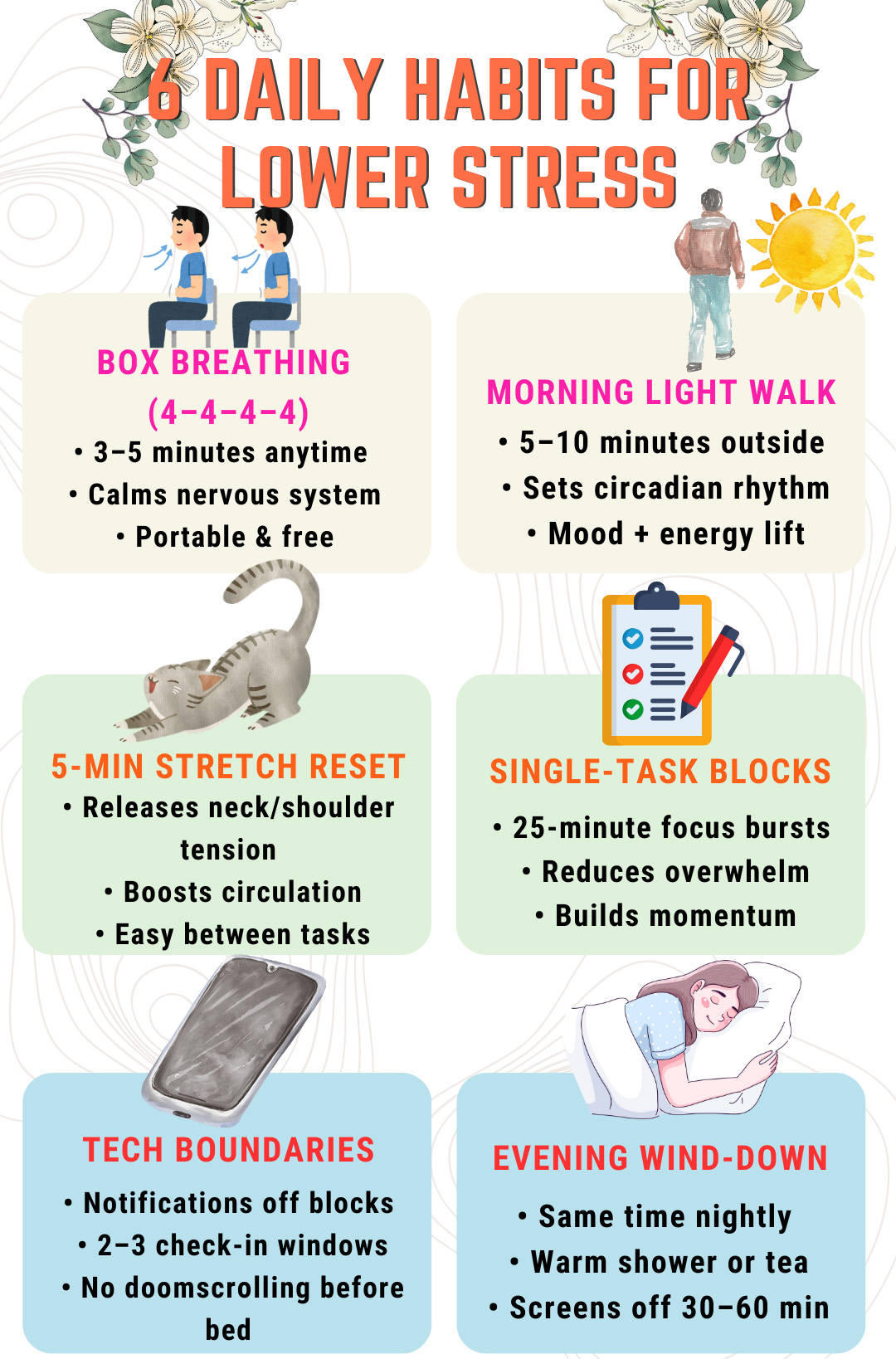
1. Box Breathing (4-4-4-4)
Take 3–5 minutes to practice box breathing—inhale for 4 seconds, hold for 4, exhale for 4, hold again for 4. This calms your nervous system, lowers anxiety, and brings you back to the present. It’s completely portable and free, perfect anytime stress hits.
2. Morning Light Walk
Start your day with 5–10 minutes outside. Natural light in the morning helps set your circadian rhythm, boosting energy and mood for the entire day. A short walk also encourages gentle movement, which reduces cortisol levels.
3. 5-Minute Stretch Reset
Tension builds up in your neck, shoulders, and back—especially during long work sessions. Take a quick stretch break between tasks to improve circulation and release muscle tension. It’s an easy habit with instant benefits.
4. Single-Task Focus Blocks
Avoid multitasking. Use 25-minute single-task blocks to give your brain one job at a time. This approach reduces overwhelm, boosts productivity, and helps you stay mentally present. One focused block can build momentum for your whole day.
5. Tech Boundaries
Set limits with your phone to avoid mental fatigue. Try turning off notifications, checking in just 2–3 times a day, and avoid doomscrolling before bed. Clear tech boundaries create more time for rest, reflection, and real connection.
6. Evening Wind-Down Routine
Start winding down at the same time each night. Take a warm shower, sip calming tea, and turn screens off 30–60 minutes before sleep. This helps signal your body it’s time to relax, improving both sleep and stress resilience.
Final Thought: Stress Less, Live Better
You don’t need drastic changes to feel calmer. These small, daily habits help you stay grounded, reduce tension, and protect your energy. Make them part of your routine, and you’ll feel the difference in both your mind and body.
A 304-page, doctor-written guide for when professional help is delayed.
Affiliate: We may earn a commission at no extra cost to you.
No medical advice. In emergencies call 911.


